01
Process line heating
Maintain temperature in liquid or gas pipelines, prevent freezing and condensation.
 DIANREZHANELECTRIC HEATINGGet a selection ↘
CIRCULATION HEATER
A complete heating section inside one pressure vessel — the medium flows through, leaves at your target temperature.
OVERVIEW
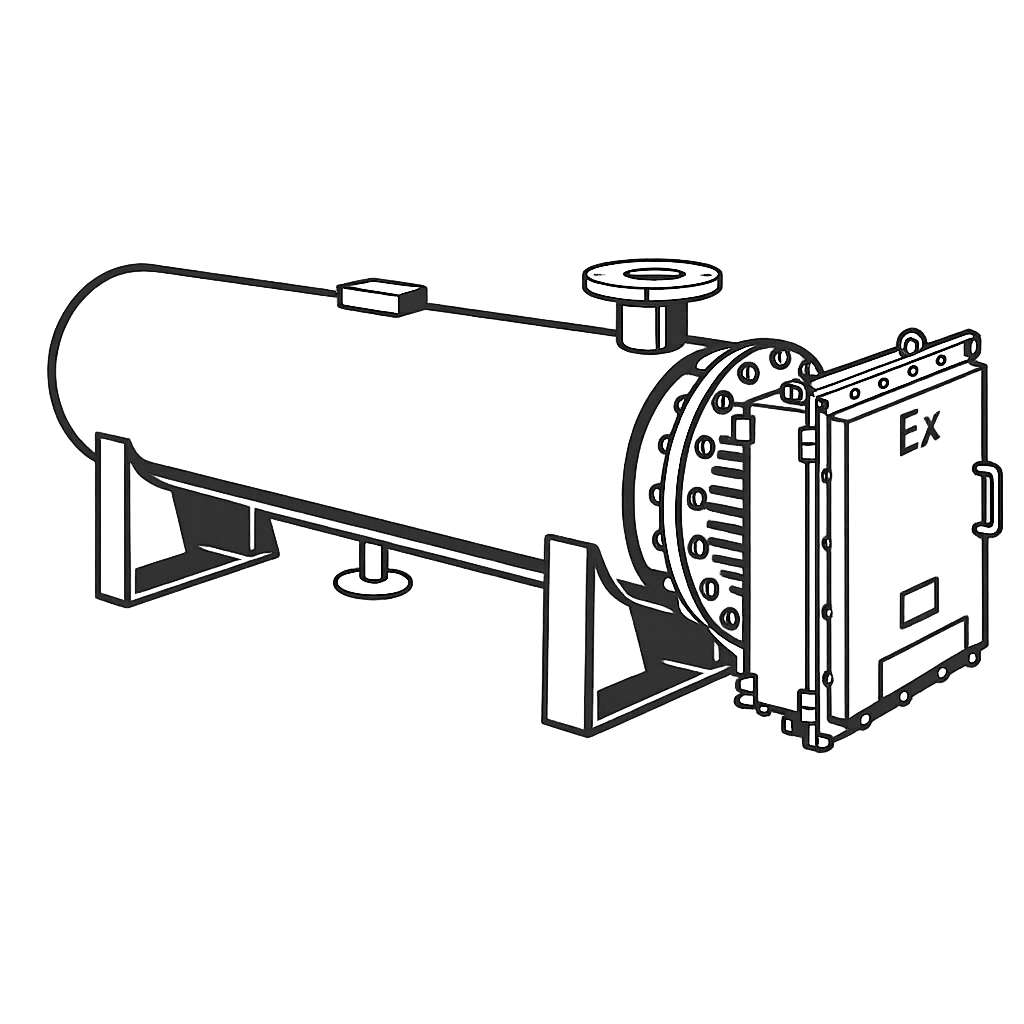
A circulation heater (inline heater) combines tubular heating elements, a pressure vessel and the control sensors in one flanged unit. The process medium — water, thermal oil, gas, hydrogen, nitrogen — passes over the elements and exits at the target temperature, so the heater drops straight into an existing pipeline.
Elements are replaceable through the flange; the vessel is engineered to your design pressure and connection standard (DIN / ANSI / GB). Power is staged through contactors or an SSR / SCR controller to follow your process demand.
APPLICATIONS
Maintain temperature in liquid or gas pipelines, prevent freezing and condensation.
Heat source for circulating water or oil loops feeding multiple consumers.
Nitrogen, hydrogen, natural gas preheating before pressure reduction or analysis.
SELECTION INPUT
FAQ
Each element watt density defines a minimum velocity. Below it, local overheating shortens element life — we size the vessel and baffles so your real flow stays inside the safe window.
Yes. Tell us the intended orientation at inquiry stage; the vessel support and element bundle are adjusted accordingly.
We supply sensors as standard and can integrate a control cabinet (SCR power regulation, over-temperature limit) matched to your PLC.
INQUIRY PREP