01
Drying ovens & dryers
Hot air supply and recirculation for batch and continuous dryers.
 DIANREZHANELECTRIC HEATINGGet a selection ↘
DUCT HEATER
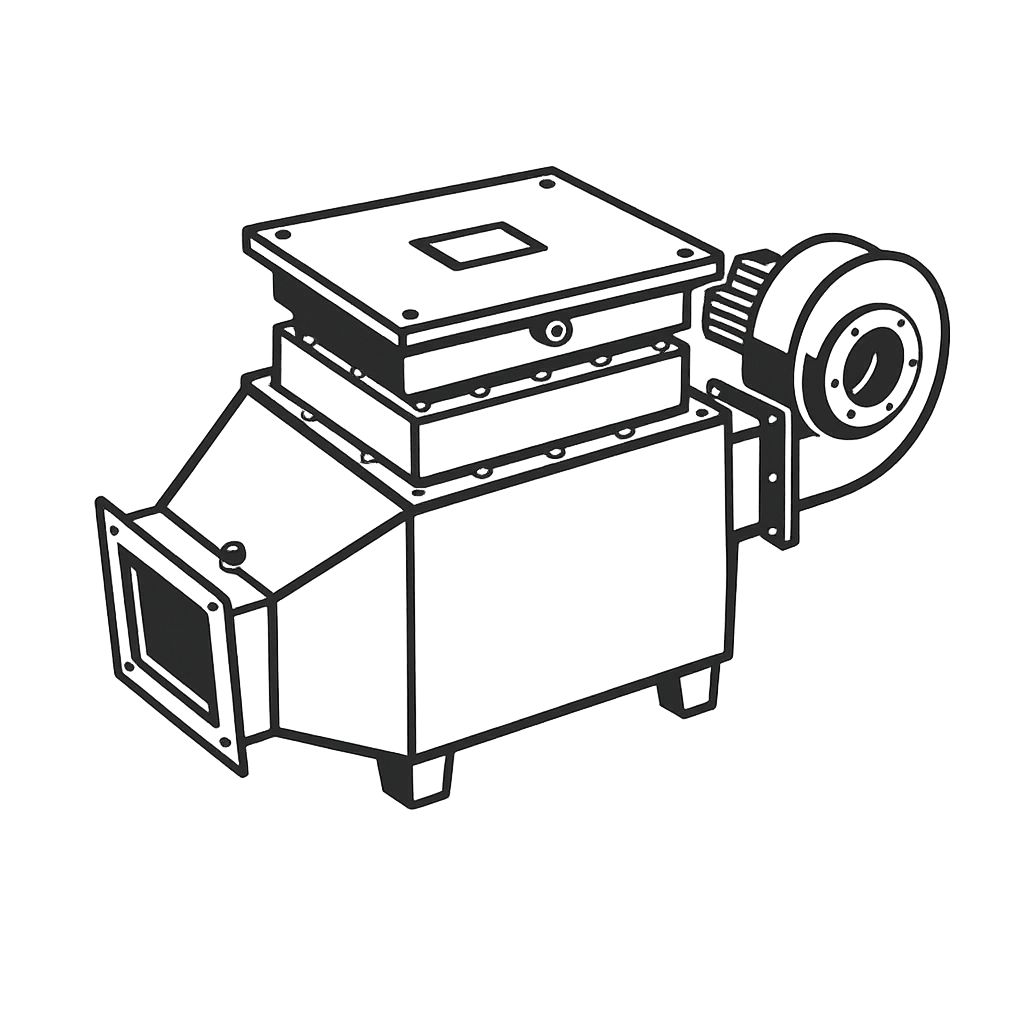
Tubular elements in a flanged frame, mounted directly into your duct — the whole air stream passes through the heated bank.
OVERVIEW
An electric duct heater heats process air directly: straight or finned tubular elements are mounted in a flanged frame that bolts between two duct sections. Finned elements enlarge the heat-transfer surface, so a compact bank can carry high power at moderate air velocity.
Staging or stepless SCR control keeps the outlet temperature stable while the fan ramps up and down. Interlocks with fan status and a downstream over-temperature thermostat protect the heater when airflow is lost.
APPLICATIONS
Hot air supply and recirculation for batch and continuous dryers.
Pre-heating exhaust streams before SCR / RTO / biofilter stages.
Make-up air and recirculation air heating with stable outlet temperature.
SELECTION INPUT
FAQ
Airflow must be proven before power is enabled. We supply fan-differential-pressure interlocks and a redundant over-temperature limiter as the standard safety chain.
Finned elements need reasonably clean air. For dust-laden exhaust we widen spacing, use straight tubes and recommend filtration upstream.
Yes — element banks can be segmented and controlled independently in one flanged frame.
INQUIRY PREP