01
Reactor heating
Jacket and coil heating for chemical reactors with shock-free temperature ramps.
 DIANREZHANELECTRIC HEATINGGet a selection ↘
THERMAL OIL HEATER
Electric heat in, uniform oil loop out — precise, clean temperature control without flue gas or steam infrastructure.
OVERVIEW
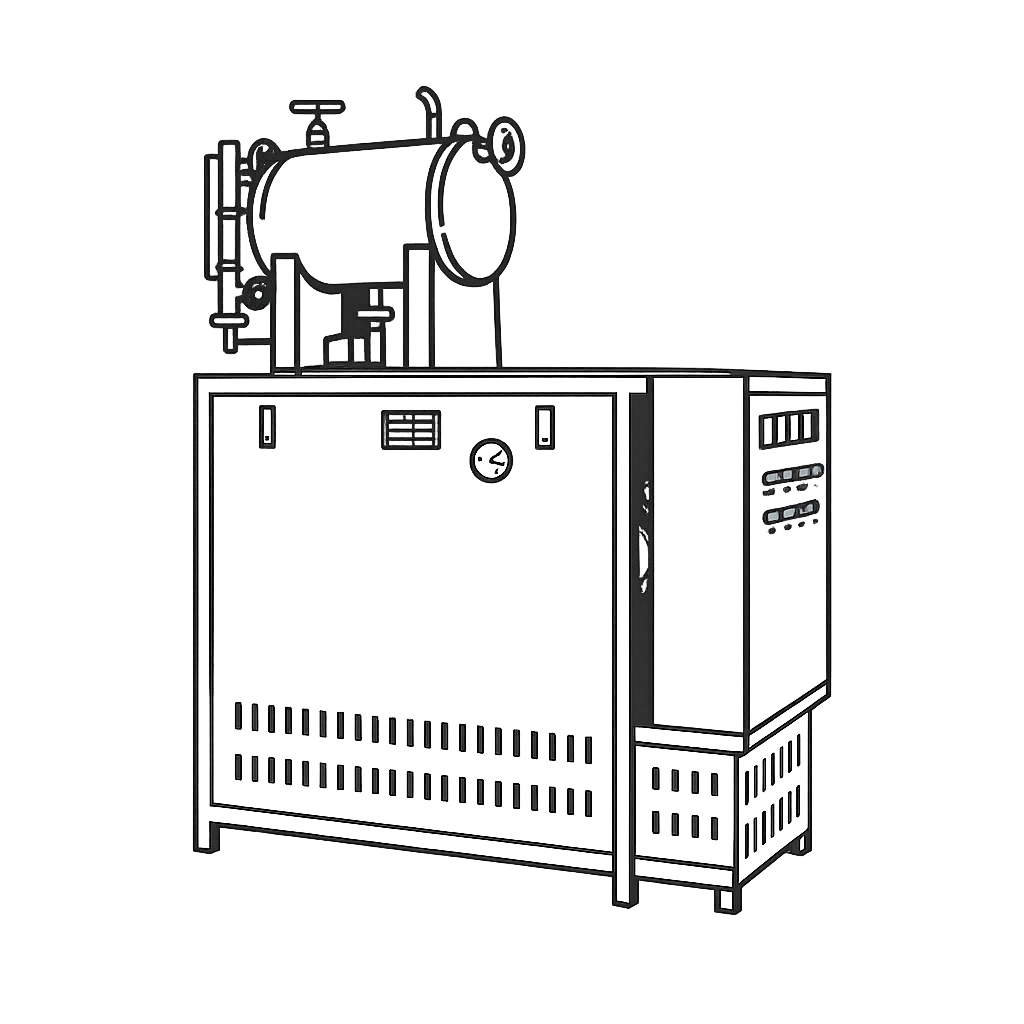
An electric thermal oil heater circulates a heat transfer fluid through a circulation heater and out to one or more heat consumers — reactor jackets, calender rolls, presses, molds. Because the loop is closed and electrically heated, temperature control is precise and the heat source is free of combustion and emissions.
Skid packages include the heater vessel, circulation pump, expansion tank and control cabinet, factory-piped and tested. Multi-zone systems supply several consumers at different set points from one loop.
APPLICATIONS
Jacket and coil heating for chemical reactors with shock-free temperature ramps.
Uniform surface temperature for calenders, laminating presses and mold temperature control.
Central heat source feeding dryers, heat exchangers and tracing loops.
SELECTION INPUT
FAQ
Electric wins on control precision, installation simplicity and emissions — you need only a power supply. Fuel-fired wins on energy cost at very large continuous loads. We help you compare at your load profile.
Typically several years within the fluid's temperature window. The critical factor is keeping film temperature below the fluid limit — our element watt density is selected for that.
Yes, but the loop runs the pump to equalize temperature before ramping power — the control sequence handles this automatically.
INQUIRY PREP